
Website Creation: The Complete Guide to a Site That Converts in 2026
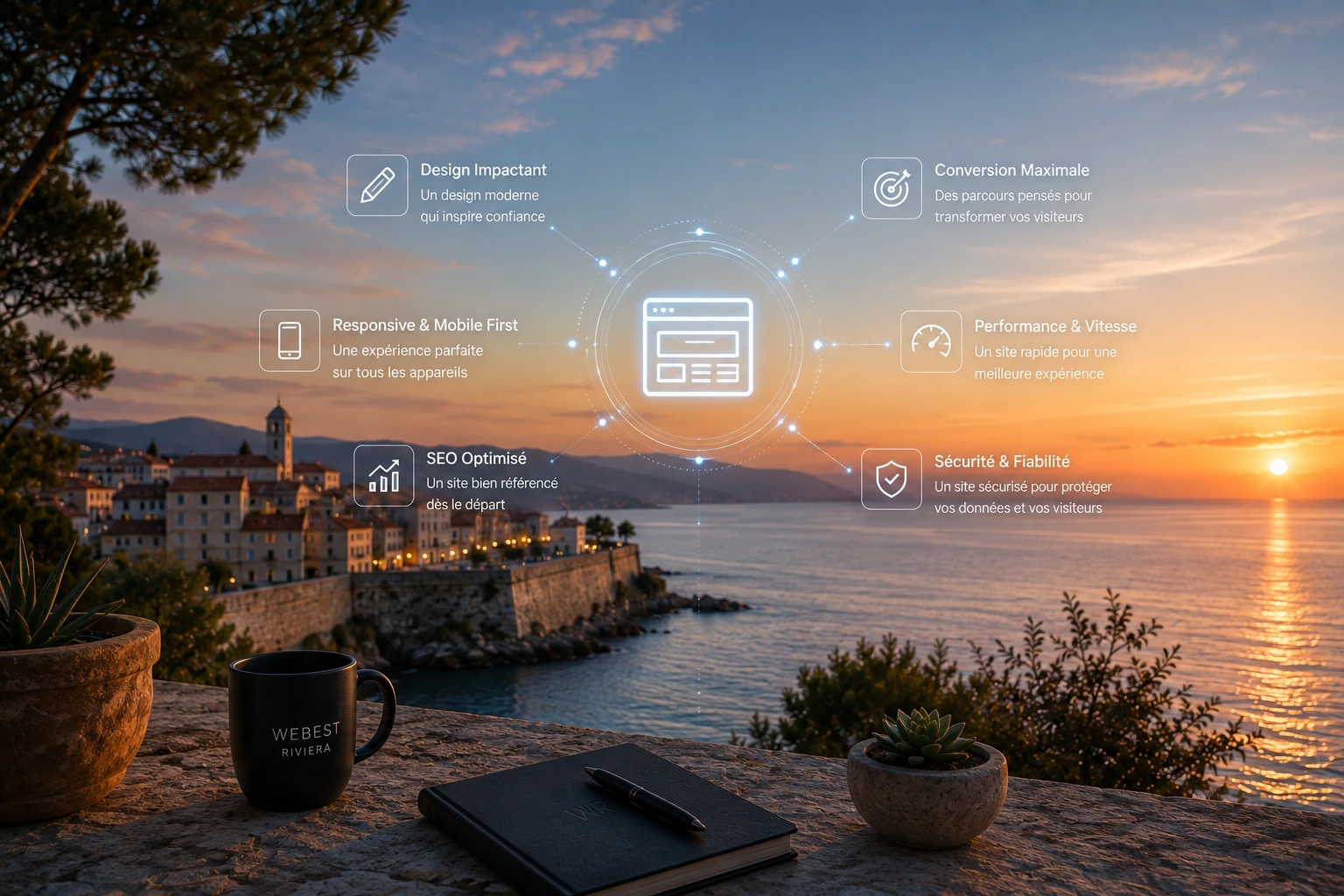
A poorly designed website doesn’t just underperform — it can actively harm your image, especially if a prospect compares it to a better-built competitor. Before starting a build project, here are the decisions that genuinely matter — well beyond picking a theme or a colour.
Brochure or ecommerce: choosing the right type of site
A brochure site presents your business, reassures visitors of your professionalism, and generates contact requests. An ecommerce site goes further by allowing direct online transactions — which brings additional requirements: inventory management, secure payment, delivery logistics, online after-sales support. The choice shouldn’t be driven by trend but by genuine relevance to your business: a restaurant rarely needs a complex checkout, a product-based business often has everything to gain from one.
The technical foundations that actually matter
Load speed
A site that takes more than three seconds to display loses a significant share of visitors before the first click — an effect even more pronounced on mobile, on the go. This slowness rarely comes from the content itself, but from heavy technical foundations: general-purpose platforms overloaded with plugins, poorly optimised themes, uncompressed images. Modern static technologies (like the ones we use at Webest Riviera) ship a minimal amount of code to the browser by default, with sub-second load times even on a modest mobile connection.
Security
A site built on lightweight foundations, with no database permanently exposed, mechanically reduces the attack surface available to a hacker. That’s a technical argument, but with a very concrete consequence: less risk of being hacked, less emergency corrective-maintenance cost.
Mobile-first design
Designing a site with the smallest screen in mind first — then adapting it to larger screens — consistently gives better results than the reverse. It has also become a direct ranking factor for Google, which primarily indexes a site’s mobile version.
Design that actually converts
Good design isn’t just about looks — it guides the eye toward the action you want the visitor to take. A few principles that make a measurable difference:
- A clear visual hierarchy: the main headline, subheadline and call-to-action button should stand out immediately, with no effort to parse.
- Visible social proof: customer reviews, case studies, concrete numbers — reassure a visitor who doesn’t know you yet.
- Explicit calls to action: “Request a quote” converts better than a vague “Learn more” when the visitor’s intent is already commercial.
- A polished first impression: the first few seconds on a page largely determine whether a visitor stays or leaves — colour psychology and layout clarity play a direct role in that decision.
Content that builds trust
Beyond design, certain content elements concretely reduce friction to purchase or contact: an “about” page that genuinely explains who you are, visible and complete legal notices, easy-to-find contact information, and — where possible — authentic customer reviews rather than hard-to-believe anonymous testimonials.
SEO from day one, not as an afterthought
A site designed with SEO in mind from its initial structure (clear architecture, one page per search intent, structured data, controlled load speed) starts with a considerable head start over a site trying to “catch up” on SEO after several months live. We cover this approach in detail in our complete local SEO guide, a natural continuation of this article.
The most common mistakes seen on the French Riviera
Looking across the local market, certain mistakes recur strikingly often: sites not updated in years, clearly neglected mobile versions, multi-second load times, and city pages with near-identical content from one town to the next — a signal Google increasingly penalises explicitly.
Our method
At Webest Riviera, every project follows six structured steps — Discovery, Definition, Design, Development, Deployment, Ongoing support — detailed on our agency page. You can also browse our website design and ecommerce services directly.
In short
A successful website combines fast, secure technical foundations, design that guides toward action, content that builds trust, and a structure designed for search from day one. Neglecting any one of these four pillars almost always means redoing the project, at greater cost, a few years later.
Frequently asked questions
Is a brochure site or an ecommerce site better?
It depends on your business model, not a trend. A brochure site is enough if your goal is generating contact requests or in-store visits. An ecommerce site only makes sense if direct online selling genuinely fits your business — it comes with heavier costs and management than a simple brochure site.
Does a website need to be responsive (mobile-friendly)?
This stopped being optional a long time ago. Over half of web traffic is mobile, and Google primarily evaluates a site's mobile version for ranking. A non-responsive site is structurally disadvantaged, regardless of how good its content otherwise is.
How long until you see the first results after launch?
A well-built site can generate contact requests from day one through targeted advertising, but organic search typically takes three to six months to build up meaningfully.
Should you write the site's content yourself or leave it to the agency?
Both approaches work. What matters is that the final content genuinely reflects your real expertise and answers the concrete questions your customers ask — generic content, even well written, always converts worse than content specific to your business.
Ready to take your online presence further?